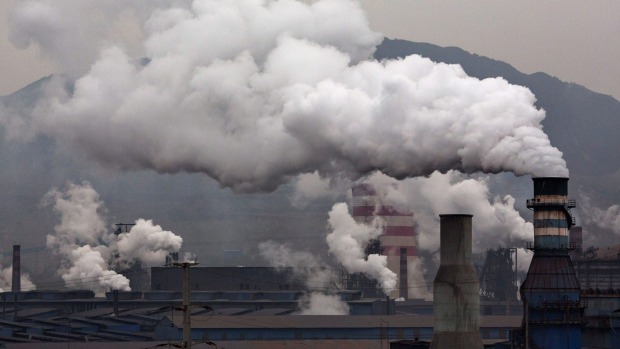

Contaminated rivers or soils, abandoned industrial waste… Do you live near a polluted site?
Denouncing the climatically aberrant behavior of companies to encourage them to change their practices, such is the bet of the Swiss environmental NGO Initiative des Alpes. For 18 years, she has awarded the prize of the product with the most absurd transport in terms of CO2 emissions.
On the podium, Tuesday, September 29, we find pickles from Vietnam, pomegranate grown in Peru and packaged in Egypt. But the big 2020 winner of the “Devil’s Stone” is a water sold by a Canadian company.
This company recovers blocks of ice that float in the Atlantic off the coast of Newfoundland. The blocks are brought ashore by boat and then by truck to the factory where they will fill water bottles, which then return to the port. From there, they cross the ocean for Belgium. Once they arrive, they are taken on board again in trucks for Switzerland … but only after a stop in Bordeaux.
A scandal all the greater since, recalls the Initiative des Alpes, Switzerland does not lack water. The NGO also won its case: the Manor group, which distributes this water in Switzerland, announced that it was going to withdraw the product from its shelves.
L’#eau des #glaciers du Groenland a été primée aujourd’hui pour son absurdité. La Pierre du diable 2020 revient à Manor pour avoir commercialisé de l’eau issue de la fonte de glaciers produisant ainsi 794g de #CO2 par bouteille de 750ml. #TransportAbsurde https://t.co/fBEHKdjWXh
— Alpen-Initiative (@alpeninitiative) September 29, 2020
Greenland water succeeds the list of “devil’s stone” at pure alpine air sold as a spray by the Zurich-based company Swiss Air Deluxe … But beyond these laughing examples and which testify to the lack of ecological awareness of some companies, the initiative of the Alps reminds us that the climate issue has not disappeared from radar in Switzerland despite the Covid-19 crisis. Like its European neighbors, the Swiss confederation sees its GDP has fallen historically because of the pandemic.
However, green activism is alive and well in Switzerland, as evidenced by the resumption of climate marches, which are very popular in the country. Last week in Bern, environmental protesters held a sit-in in front of Parliament in full session, despite the law prohibiting it. The action even gave rise to very tense exchanges between deputies. The climate issue is also coming up in the courts with the appeal judgment last week of activists who had occupied Credit Suisse in Lausanne to denounce the bank’s investments in fossil fuels. First acquitted because of the extreme necessity of their action, the Court of Appeal finally convicted them.
Last example: the ballot boxes. The Swiss vote a lot and often on a wide variety of topics, including ecology. Thus, in the list of the next votes is the initiative for the glaciers. The text calls for the country to achieve carbon neutrality and ban fossil fuels in 2050. But no date has yet been set for the referendum.