
In a rural area of northern Cambodia, rice husks are used as fuel to generate electricity for local communities otherwise dependent on highly polluting diesel generators.
The project is financed by individuals and companies at the other side of the world who buy carbon credits — each worth a ton of carbon dioxide equivalent — to offset CO2 emitted on their home turf.
This is just one way in which CO2 is traded across the globe and one of the carbon market models that negotiators are being discussed at the COP25 climate conference in Madrid. The aim is to come up a regulatory framework for a global carbon trading system, a complex issue that falls under Article 6 of the Paris Agreement.
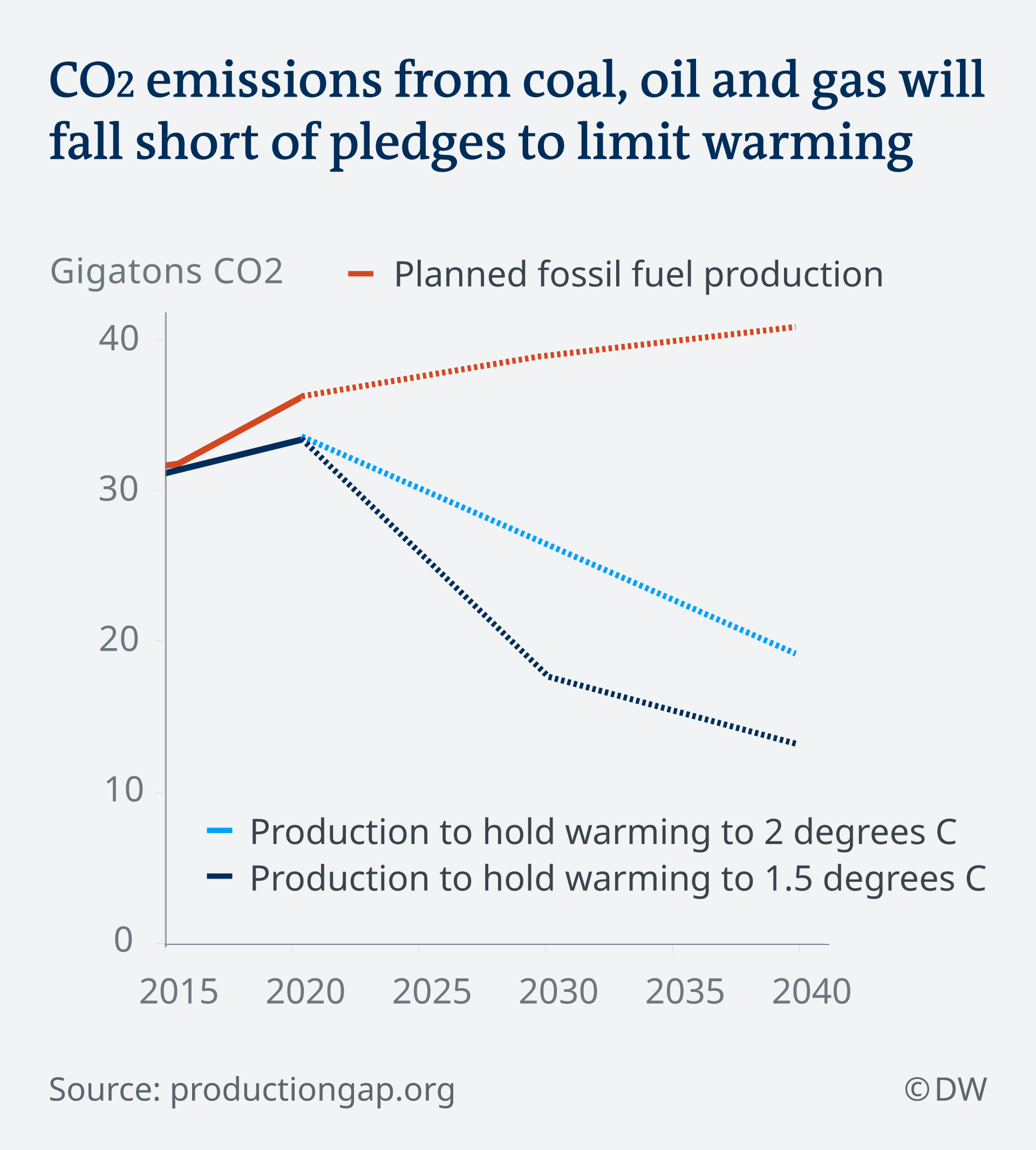
Almost 190 nations have ratified the historic climate agreement which aims to limit global warming to no more than 2 degrees Celsius above pre-industrial levels by the end of this century — and ideally to 1.5 degrees C.
But current reduction targets — known as nationally-determined contributions (NDCs) — set by individual nations render both goals unrealistic. On the basis of existing pledges, experts project a global temperature rise of at least 3 degrees C.
Carbon markets, say advocates, could hold the key to more ambitious targets.
But Ann-Kathrin Schneider, head of international politics at BUND, Friends of the Earth Germany, says Article 6 poses “a big risk to the Paris Agreement.” She believes carbon trading has the potential to distract nations from actually reducing carbon emissions.
“I wouldn’t say it’s a technical issue,” she said. “It’s a very political issue.”

Trading options
Two different systems of carbon trading will be up for discussion in Madrid. The first would allow countries that exceed their own climate targets to sell excess emission reductions to nations struggling to meet their goals.
If, for example, a country that set out to reduce its emissions by 100 tons of CO2 equivalent, manages to make actual reductions of 110 tons, it could sell the excess 10 tons to a country falling short on its NDCs.
Stefano de Clara, director of international policy at the non-profit International Emissions Trading Association (IETA), which works to establish an international framework for trading in emission reductions, says such schemes are a “key tool” to enable countries to reach the Paris commitments.
“Ideally, we could have a global fully-fledged market where everyone trades with each other,” he told DW, adding that ever more countries are considering carbon markets as a way to meet their NDC goals.
But critics are concerned about this growing interest on the grounds it could prompt some countries to set intentionally low national targets so they can sell their excess credits.
“Achieving unambitious NDCs shouldn’t be enough to be allowed to participate in market-based mechanisms,” Carsten Warnecke, founding partner of the NewClimate Institute, told DW.
He believes all NDCs should be ambitious enough to secure a well below 2 degree Celsius scenario, and he makes a case for only allowing countries with Paris-aligned targets to participate in carbon trading systems.
“It is so ambitious that in theory only very few countries in the world would be able to sell emission reductions,” he said.
Gilles Dufrasne, policy officer on carbon pricing at Carbon Market Watch, goes even further. Rather than carbon credits resulting from domestic emissions achievements being sold to another country, he would like to see the money set aside to reach another Paris goal — a $100 billion (€90.8 billion) annual fund for mitigation and adaptation measures in developing countries, which are often worst affected by climate change.
“So you count the finance but you don’t attribute the emission reduction to yourself – to the country or the company,” Dufrasne said. “It really comes on top, which is what markets, even buying credits, should be about. It should be a system to really increase your ambitions to bring about more emission reductions.”
Offsetting emissions
Rules to govern trading through offsetting will also form part of the Article 6 discussions in Madrid, with negotiators developing regulations for what is known as the Sustainable Development Mechanism — a tool which succeeds the Clean Development Mechanism (CDM) that was created over a decade ago under the Kyoto Protocol.
The CDM has allowed rich countries to offset their domestic CO2 output by funding emissions-reducing sustainable development programs in developing countries.
But Carbon Market Watch estimates around 85 percent of projects financed under the CDM would have gone ahead regardless.
“It was supposed to be a system to allow countries to set more ambitious targets,” Dufrasne said. “But what it actually did is just make it cheaper to reach existing targets and you can even argue that it weakened the targets because instead of really reducing emissions, countries bought credits that don’t really represent much.”
Critics also argue that credits used under the CDM are too cheap and should not be included in any new carbon trading scheme — a point that has already proved contentious among nations that hold those credits.
Strict rules
Environmentalists say strict rules will be integral to the success of any global trading scheme, and must prevent double counting — in which both the countries buying and selling a given credit claim the reduction as their own.
IETA’s de Clara argues that if negotiators in Madrid are able to secure tough regulations, Article 6 will provide the incentive countries need to ensure high standards of emissions trading, which would then naturally lead to ambitious targets.
“If a country is spending tax payer money to source emission reductions abroad, it would not look for emission reductions or credits that can’t be trusted,” he said. “Under that logic, it might actually be a stick and a carrot for countries.”
But BUND’s Schneider says including carbon markets in the Paris Agreement at all could undermine it.
“We fear that if Article 6 is decided at this COP, it will detour from other instruments, like the phaseout of fossil fuels, and that people will try to seek an easy way out of climate ambition and that it will in fact reduce climate ambition and not increase it,” Schneider said.
Urgency in combatting the climate crisis is now needed more than anything, she says. For her and others like her, only direct action from countries will make a much-needed difference.